 BABAJul 11, 20269 min read
Why I Built Shiori
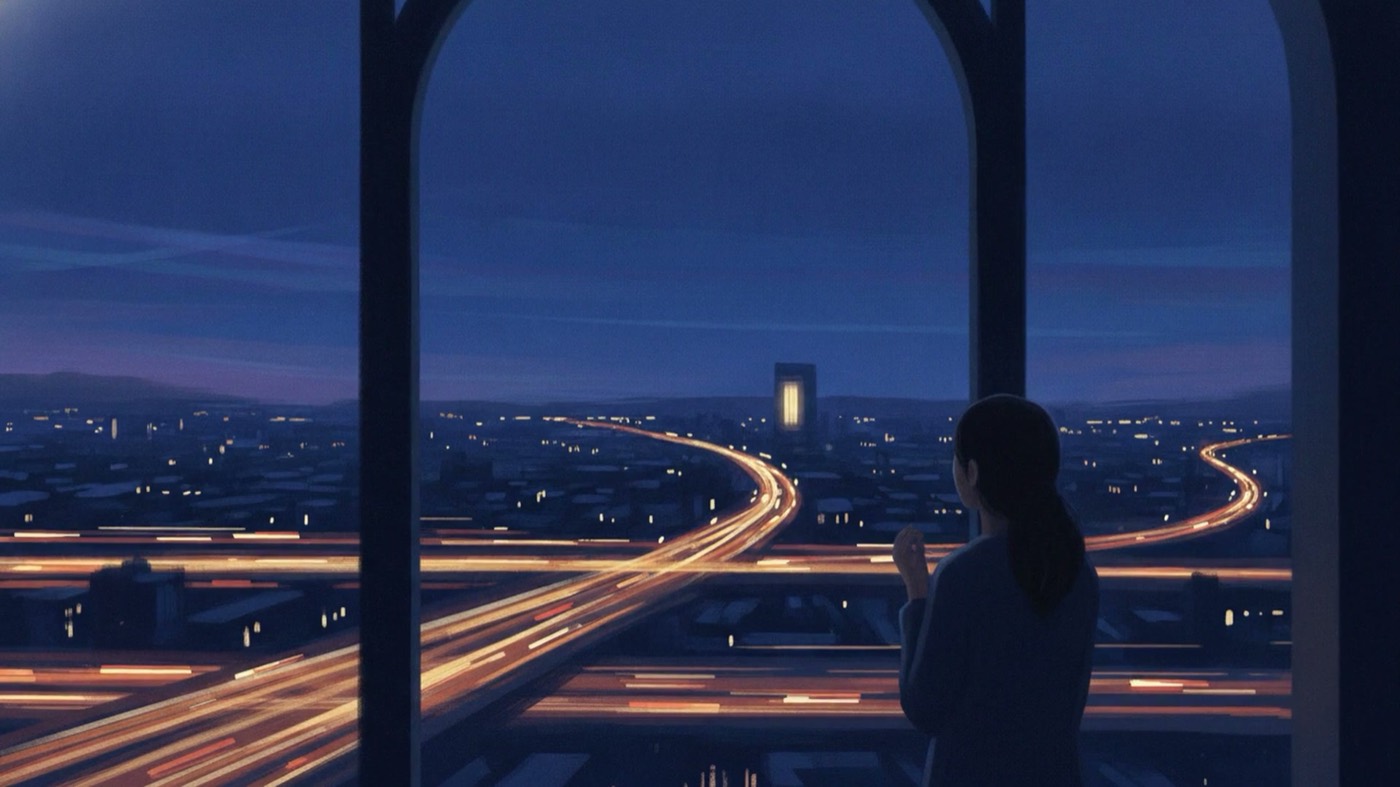
The world moves fast. Sometimes, too fast.
And right now, I feel like I'm standing in the most interesting part of this too-fast world.
This January, after celebrating the new year with my family in Thailand, I woke up to AI and traveled alone to Taiwan. At the southern tip of the island, by a beautiful sea, I looked back on my past and decided how I would live my forties. In February, I used AI to write a full-length novel. 200,000 characters. In March, I launched the first business of the company I founded.
Since April, I've been supporting startups and public companies while building an industry-specific SaaS in parallel. It's already being used in the field. In between, I made an app for my son, who just started elementary school, so he could enjoy shogi. And alongside all of that, for the past three months, I've been getting up before 3 a.m. every morning to build Shiori.
It's not that I've been working nonstop. These past six months, I've probably played more than at any other time in my life.
This might sound like bragging, but what I want to say is the opposite. This isn't a story about my ability. I have dozens of subordinates who are brilliantly smart, never complain, and work around the clock. And they remember me with a memory better than my own, coordinating beautifully with one another to do what I want done, in my place.
In 2026, the AI revolution is really happening. I can't tell you much about the bubbly stock prices, but the change that transforms how we work and how we live — that part is real. In my 42 years, I have never felt a shift this dramatic. And like a surfer in a good mood, I keep riding the great waves of change that roll in day after day.

But when I look around
But when I lift my head and look around, the landscape is completely different.
My wife, my mother, the couple next door I grew up with — they all say the same thing. AI is supposed to be amazing, but honestly, I don't get it. What they've tried amounts to talking to ChatGPT now and then. It's fun in its way, but it never goes beyond an extension of Google. Has their life actually changed? Not really.
I feel the same thing in my work supporting business owners. Even at forward-thinking companies, my honest sense is that AI is only a few percent utilized. People hear it's all-powerful, lean on it, get burned, and turn skeptical — maybe AI is meaningless after all. Meanwhile, their feeds fill up with ads that smell like get-rich-quick schemes. They feel they have to do something, but what? And so everyone scrambles around.
No wonder. The waves are just too violent.
And these waves aren't limited to AI. Between the endless flood of information and things to do, modern life is exhausting enough as it is. We watch Netflix at double speed and try to speed-read novels. Even the things meant to be enjoyed turn into things to be processed. That is a hard way to live.

Where I come from
In my early twenties, right after I founded my first company, a book by Mochio Umeda encouraged me. Precisely when things are hard, with technology in your hands, how interesting the world becomes is up to you. It was Umeda who taught me about Paul Graham. Hackers and painters are both makers, trying to make good things. Drawn to those words, I started programming at thirty, became a programmer, and founded an education startup. I've carried their words like a charm, and lived the twenty-some years since doing only what I wanted to do.
So I hit plenty of walls. I dropped out of school two or three times. My current company is my third time founding one; the previous two I shut down myself. Society and I never fit very well.
But I don't regret a single thing. I did what I wanted to do, I wasn't enough, and it didn't work out. That's all it was. Turn all of it into learning and use it for what's next. That's how I've lived, and that's exactly how I ended up here.
When you're truly all in, losing hurts. Aim seriously for the top and lose, and yes, the tears come. But I think that's a happy thing. Because there is no greater way to be alive than to take on a challenge. Taro Okamoto said it too: everyone wins sometimes, and everyone loses sometimes. But quit challenging, and there's no next stage for you. So stay in the game, he said. His art is the expression of that way of living.
And AI and technology give today's challengers the power to turn their dreams into reality — the way a painter is handed a blank canvas, brushes, and paint.

Tools exist to set people free
And that is exactly why there is one thing I want to say clearly.
However smart AI becomes, AI exists to work for humans — never the other way around.
Since we started using car navigation, we've stopped thinking about roads. That in itself is fine. The point of driving is to arrive where you're going. Decide the destination, and you can leave the rest to the machine. After all, it's just a road. Add self-driving on top, and it's perfect.
But life is not just a road. The places you want to go are never only one, and they change as you live. How you want to travel matters as much as where. And AI is not so all-powerful that you can hand your life over and let it drive. That is what it means for each of us to live a life that is singularly our own.
So if you hand everything to AI without grasping what you want to do or how you want to live, it doesn't work. That isn't mastering AI. It's just throwing yourself into a black box you don't understand. The answers that come back miss the mark; it doesn't work well, it's not useful — and you start to dislike AI.
But that isn't the truly frightening part. Keep using it that way — AI is supposed to be amazing, after all — with your thinking left in its hands, and little by little, you let go of your own will. You lose what makes you singular. You mean to be the one using AI, and you become the one being used by it. I've watched people slide toward that, up close, in my work. And honestly, I think it's such a waste.
So what I wanted to build was not a machine that produces answers. A presence that helps you find the place you want to go, and supports you as you walk there. Not something that thinks in your place — something that returns to you the time to think, and to live.
The wisdom of the techo

And so: a techo.
A techo is the Japanese word for that one book people have always carried. We wrote our plans for the future and our diaries of the past, and bound our time between its covers. A planner looks forward. A diary looks back. A techo holds both, in one place you carry with you. That practice contains, I think, a deep human wisdom.
The name Shiori comes from the Japanese word for bookmark. A small marker you slip between the pages so you can always come back to wherever you are in a long story. A presence tucked into the "now" of the story that is your life.
Just by talking, your records and your plans all gather into one techo. It knows your past and what lies ahead, and whatever it can do in your place, it does — a step ahead of you. That's why I call it an AI planner-secretary. I built it not so much as a tool on a desk, but as a companion at your side.
The entrance is two minutes before bed
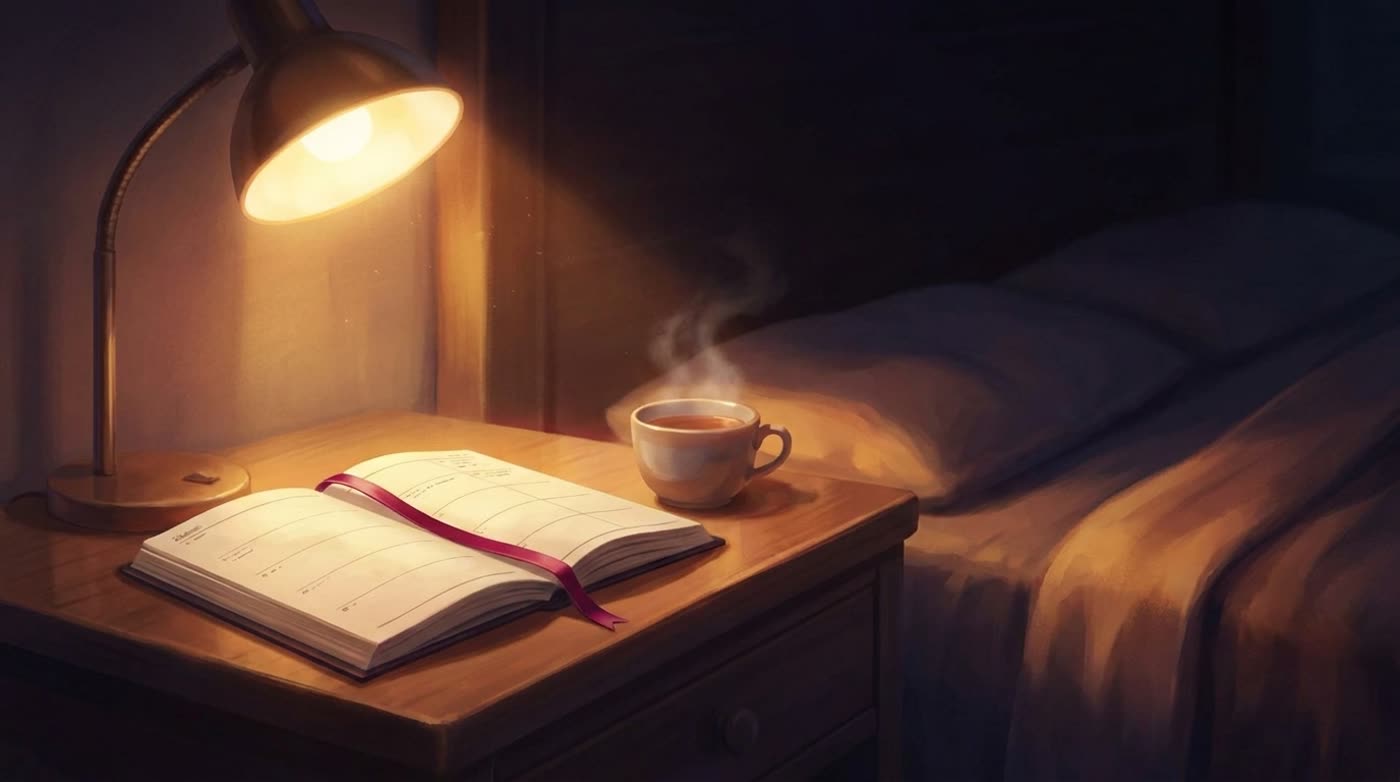
I've written a lot of big things, but the entrance is almost comically small.
Two or three minutes before bed, you talk about your day. That's all.
"Today went like this. Maybe tomorrow I'll do that." Shiori records it, turns it into tomorrow's plan, and remembers. The more you talk, the better it understands you.
I've worked as a professional coach for more than twenty years, listening to founders, students, and parents raising kids. There's one thing that experience lets me say. When people talk to people, they put on a front. They rarely say the real thing. Or they blame themselves more than they need to. But there's no point putting on a front for an AI, is there? So, strangely enough, you find yourself speaking honestly. And when your honest words are received by someone who also knows all the facts, the quality of reflection transforms. What comes back isn't a platitude — it's words meant for you.
Using AI, to me, is not a story about difficult technology. It's about establishing one small, concrete routine inside your own daily life. From two minutes before bed, a daily reflection begins; someday it becomes a reflection on your life, then the person you want to be a year from now, then the projects that will take you there. At least, that's how it went for me.
In closing
I don't know whether this will work out. It has always been that way.
But doing what you want to do with everything you have is more fun than anything. And I believe that fun is the very joy of being alive.
Living that way, enjoying the road, I've met so many wonderful people along it. Some I've drifted apart from; some I haven't seen in a very long time. Still, the time I spent with them is an irreplaceable part of my life, and as long as I go on living as myself, somewhere ahead there's a reunion to look forward to.
The truth is, I've written this piece partly as a letter to you — the you I remember fondly. I'm always buried in whatever is right in front of me, and I never manage to come see you. So if this reaches you, and something I made gets to sit beside your everyday life —
This one life: I want to burn through it, and enjoy it to the very end. I want each of us to be able to say, that was so much fun. If I can contribute to a world like that, even a little.
With that hope in my chest, I poured everything I've learned in these 42 years into this small product — my life's work, and my artwork. I'd love for you to try it.